Key Results
64% → 90%
Site Health
Audit baseline → later measured state (+26 percentage points)
251
Audit Issues Reviewed
26 errors · 216 warnings · 9 notices
76
H1 Structure Review
Pages with multiple H1 structures reviewed
48
Page Titles Optimized
Documented on-page optimization work
Audit Workload Breakdown
The initial SEMrush site audit established a comprehensive baseline of 251 flagged items across varying levels of algorithmic severity.
26
Critical Errors
High-priority technical issues impacting search bot indexing, internal broken links, duplicate titles, and status code errors.
216
Audit Warnings
Structural anomalies including multiple H1 tags, missing meta descriptions, low word counts, and internal linking distribution.
9
Audit Notices
Low-impact technical observations regarding URL formatting, platform directives, and bot crawl efficiency notes.
251
Total Flagged Issues
Sitewide issues reviewed across technical crawlability, on-page content, metadata, architecture, and platform constraints.
Audit to Optimization Workflow
The project was executed through a disciplined engineering process—evaluating issue context, technical feasibility, and algorithmic impact rather than indiscriminately fixing raw crawler warnings.
Identify Issues
Run comprehensive SEMrush crawler audits across all indexable routes to isolate technical, on-page, and structural anomalies.
Review Severity
Examine issue severity, page commercial importance, crawl depth, and whether items stemmed from custom code or platform themes.
Implement Fixes
Directly remediate actionable findings: redirect broken URLs, rewrite duplicate page titles, authors metadata, and repair links.
Classify Platform Items
Separate genuine site flaws from Wix/CMS template quirks, low-impact notices, and intentional deep technical case-study formats.
Verify Health Lift
Re-audit the domain environment to verify healthy indexing, measuring the Site Health jump from 64% to 90% (+26 percentage points).
SEO Audit Dashboard
SEMrush Site Audit used to identify technical, crawlability, metadata, heading, linking, and structural SEO issues across the website.
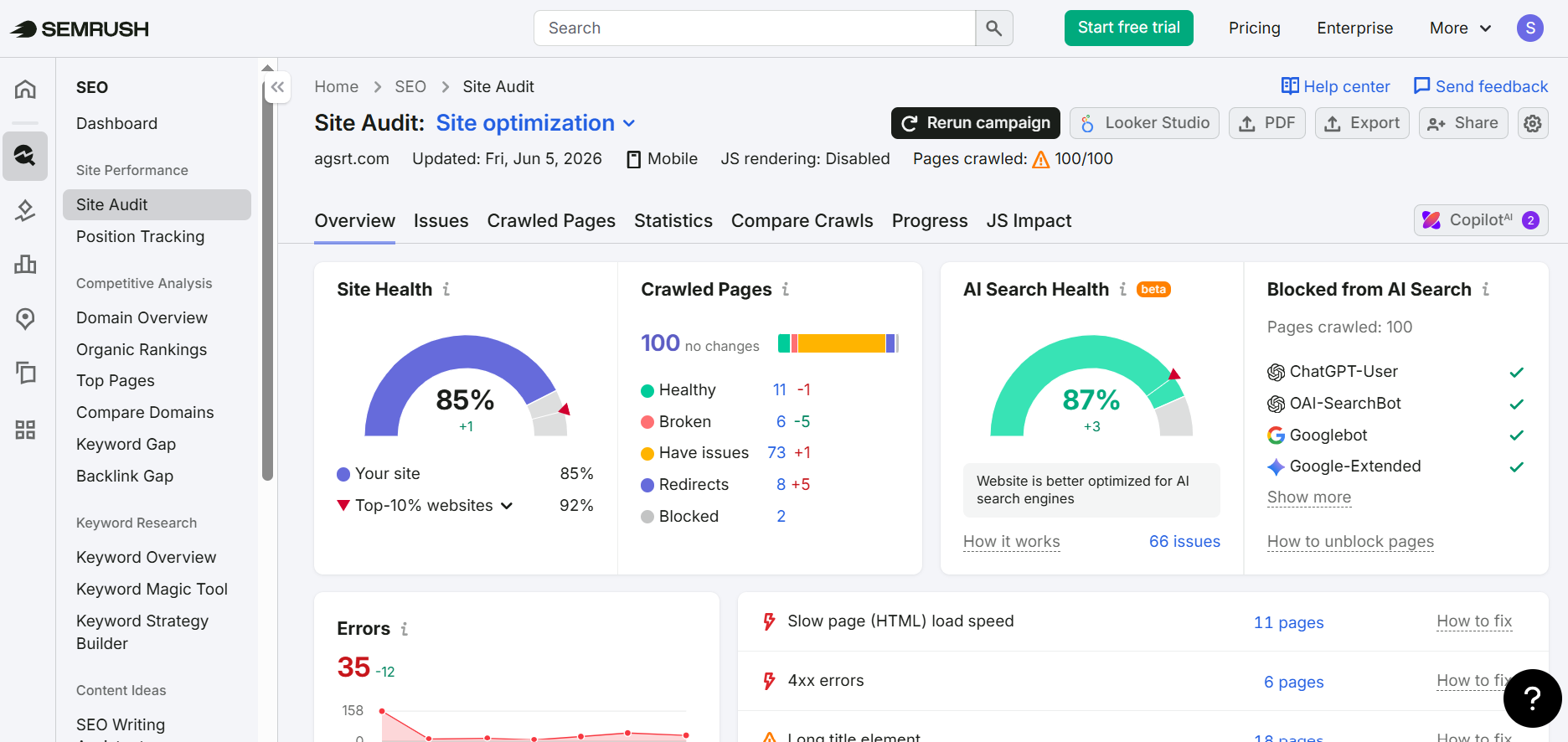
SEMrush Site Audit Baseline & Diagnostics
Snapshot of initial crawl health, flagged issue categories, indexation status, and crawl depth metrics for agsrt.com.
Technical SEO Improvements
Targeted remediation of technical bottlenecks that impeded search engine crawlers, drained crawl budget, or created broken user journeys.
Internal Broken Links
Repaired dead internal hyperlinks across core curriculum modules, eliminating 404 crawl dead-ends.
4XX Status Codes
Investigated client-side error routes; implemented 301 redirects to active relevant training pathways.
Duplicate Title Tags
Resolved verbatim title duplication across landing pages to stop internal keyword cannibalization.
Duplicate Meta Descriptions
Re-authored unique, page-specific search snippets reflecting course syllabus differences.
Oversized HTML Pages
Audited document sizes, cleaning redundant inline code and DOM bloat for faster crawler parsing.
Redirect Management
Consolidated legacy URL patterns into direct 301 mappings, preserving historical link equity.
Crawlability Optimization
Improved XML sitemap hygiene and robots.txt directives to focus bot crawls on primary pages.
Technical SEO Cleanup
Reviewed canonical tags, pagination directives, and trailing slash consistency across routes.
Rather than blindly treating every crawler warning as a direct bug, manual classification was conducted to isolate CMS/Wix platform artifacts from true site failures:
- 404 Error:
gis-software-training-programswas traced to a retired legacy course page and resolved via a direct 301 redirect. - 503 Status:
geoai-arcgis-prowas diagnosed as a temporary service-side hosting hiccup, verified and resolved without code changes. - 403 Errors: Wix blog profile links were identified as platform-restricted member profile endpoints, correctly classified as non-actionable template constraints that posed no threat to search indexation.
On-Page SEO Optimization
“Performed a structured metadata cleanup across page titles, descriptions, and heading/title relationships to improve search-result presentation and page structure.”
Page Titles
Optimized for CTR
Title Length
Truncations resolved
Meta Descriptions
Missing tags written
Duplicate Titles
Cannibalization fixed
Duplicate Snippets
Custom copy created
H1/Title Clash
Hierarchy corrected
Heading Structure Optimization
Reviewed and corrected heading structures across pages with multiple H1 tags, while distinguishing genuine content-level issues from headings generated by common Wix/template sections.
Pages Reviewed for H1 Structure
Conducted an in-depth audit of 76 pages flagged by SEMrush for multiple H1 instances, isolating page content from template artifacts.
Hierarchy & Semantic Cleanup
Downgraded improper subheaders from H1 to H2/H3 on training course pages, creating a clean document outline for crawlers.
Template Heading Analysis
Investigated Wix header/footer modules where global banner sections injected secondary H1 tags. Avoided breaking sitewide theme layouts.
Internal Linking Strategy
Addressed pages with limited internal link support, establishing contextual anchor connections across commercial hubs and student project showcases.
Internal-Linking Cases
Strategically linked
Core Business Pages
Interlinked enterprise GIS consulting and professional training landing pages to maximize PageRank equity.
Service Pages
Created bidirectional contextual links between specialized curriculum tracks and software platform modules.
Student Project Pages
Anchored student thesis work and practical geospatial outputs directly back to primary course enrollment pages.
Project-Page Clusters
Grouped related geospatial mapping case studies into thematic clusters, decreasing crawl depth and click distance.
Domain & Visibility Analysis
Search visibility and keyword distribution context used to evaluate the website’s broader organic search environment.
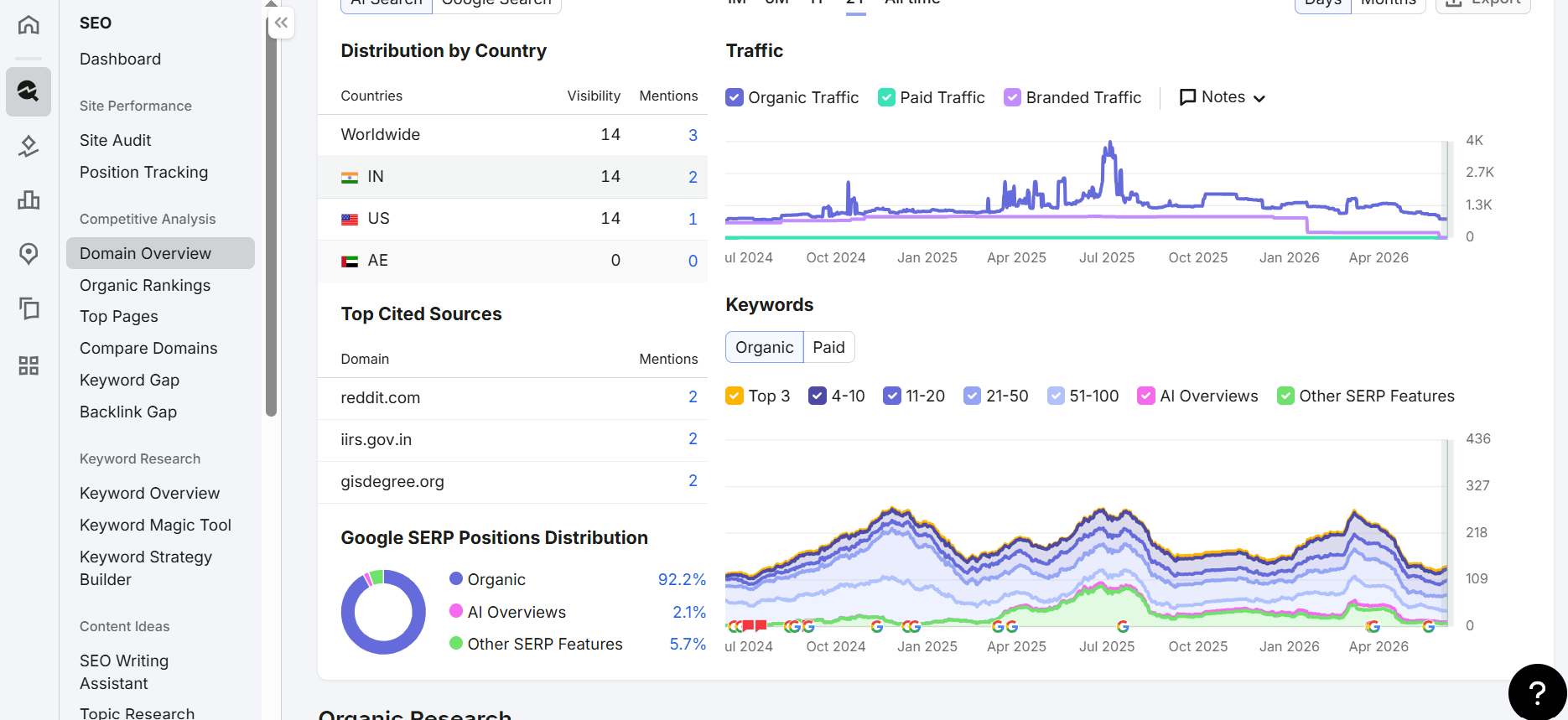
Organic Visibility & Keyword Positions
Historical view of keyword spread and organic visibility in SEMrush, reflecting the foundational impact of technical hygiene.
Note: Supporting visual evidence providing context on the domain’s organic visibility environment; the technical audit served as an essential enabler alongside ongoing content and authority initiatives.
Thematic SEO Performance
Technical SEO areas reviewed across crawlability, site performance, internal linking, HTTPS, international SEO, and structured markup.
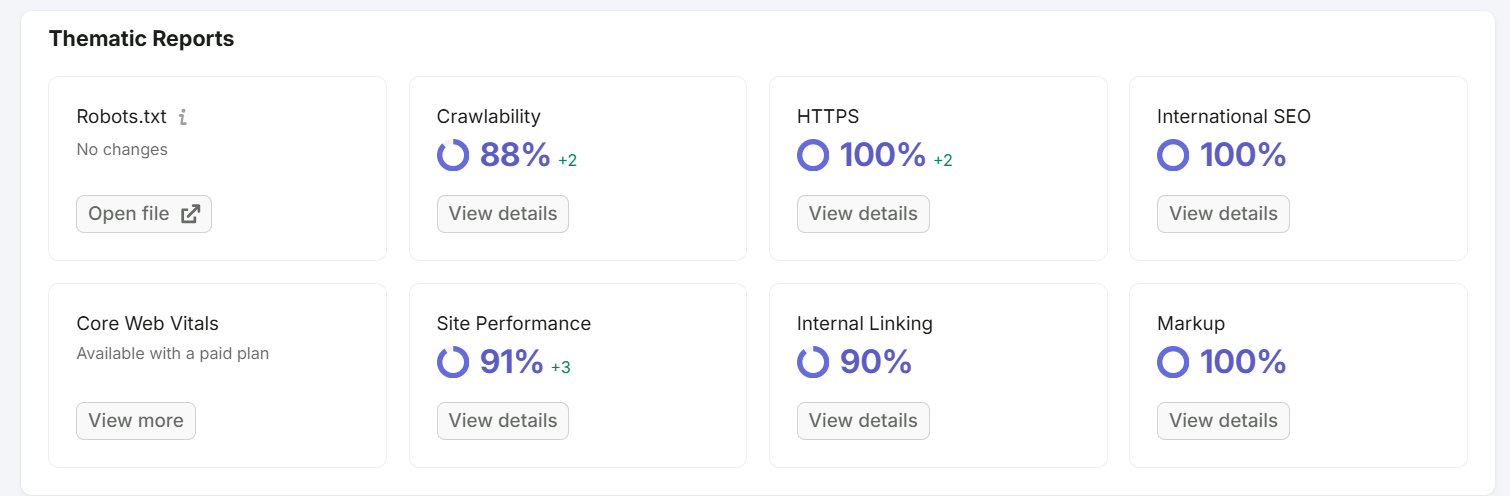
Core Technical SEO Pillars
Verification of crawlability ratings, HTTPS security, internal linking health, and structured data execution.
Content & Structure Review
Content and structure review points documented during the audit across word count, HTML semantics, and information volume.
Pages Reviewed
Content optimization needs
Low Word-Count
Pages evaluated for depth
Semantic HTML Cases
DOM structure refined
Excessive Content
Technical papers preserved
SEO Issue Triage & Prioritization
“Not every SEMrush warning was treated as a direct optimization task. Wix/template-generated issues and lower-impact technical notices were manually reviewed and classified based on their actual SEO relevance and whether direct intervention was appropriate.”
IDENTIFY
Ingest all 251 flagged crawl signals from SEMrush Site Audit without bias.
VALIDATE
Confirm whether the issue genuinely prevents crawling or harms SERP snippets.
PRIORITIZE
Group into critical errors (broken links, 4XXs) vs informational notices.
FIX / MONITOR / EXCLUDE
Deploy direct code fixes, monitor borderline issues, and exclude CMS quirks.
Actionable Fixes (High Impact)
404 redirects, missing meta descriptions, duplicate title tags, broken internal hyperlinks, and page hierarchy corrections.
Monitored Observations
Long-form specialized academic pages, title character bounds, image aspect ratios, and dynamic course routing parameters.
Platform-Excluded Items
Wix theme-injected H1 tags in global layout blocks, member profile 403 endpoints, and standard CMS JavaScript bundles.
Final SEO State
Tangible progression from initial diagnostic baseline to optimized, high-health domain state across both traditional and AI search benchmarks.
64% → 90%
SEMrush Site Health Score
Achieved a massive +26 percentage-point increase from audit baseline to later measured state, putting agsrt.com in the top quartile of technical health for its niche.
74%
AI Search Health
Remained stable during the documented optimization period, validating that technical fixes supported modern algorithmic and generative search engine retrieval.
What This Project Demonstrates
“Turned a large technical SEO audit into a structured optimization workflow by identifying actionable issues, implementing technical and on-page improvements, strengthening internal linking, and separating meaningful SEO problems from platform-generated or low-impact findings.”